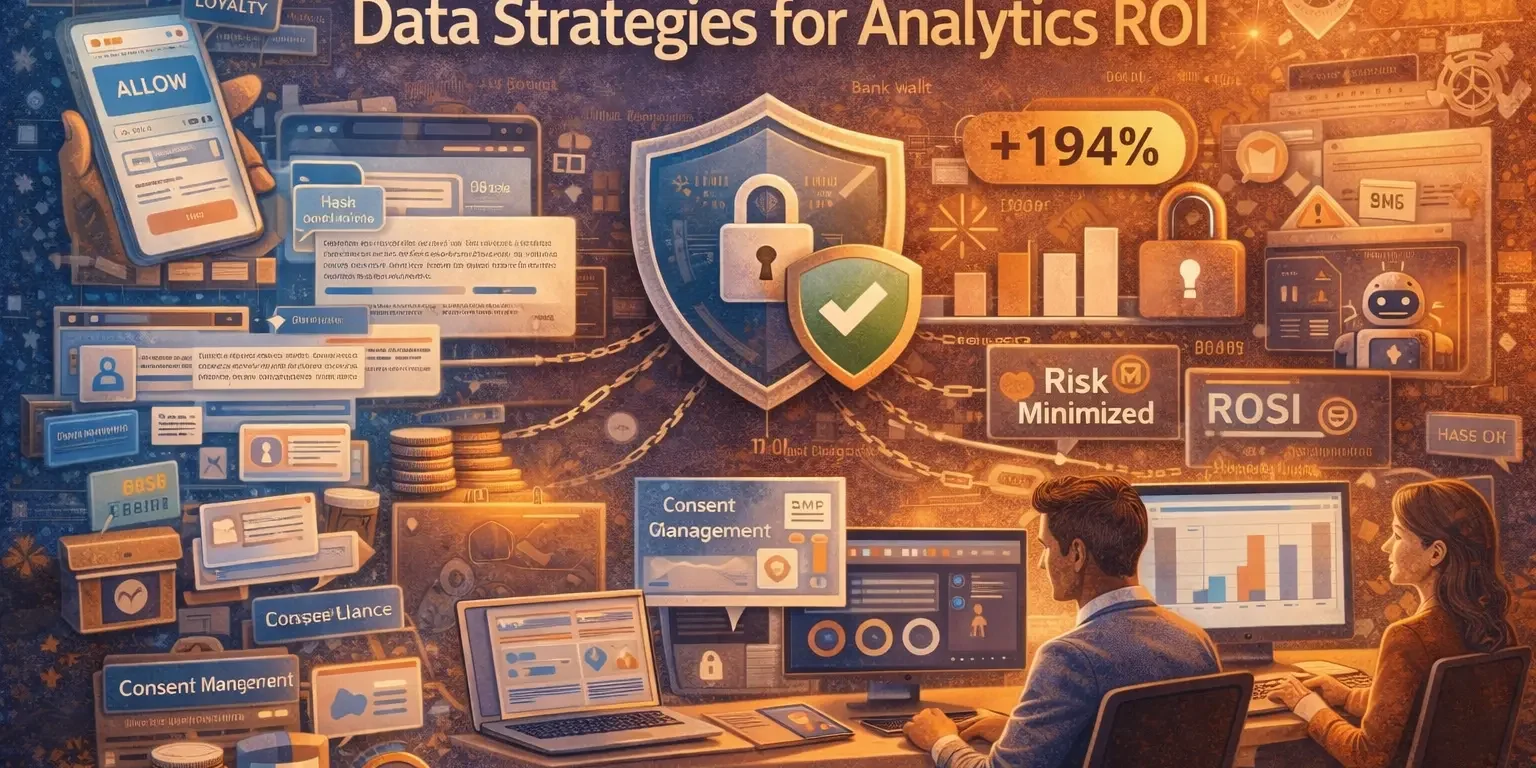
In a world where data breaches make headlines and regulations tighten like a vice, privacy-first analytics isn’t just ethical it’s a smart business move that boosts ROI by building trust and efficiency. As 2026 unfolds, with over 72% of marketers rebuilding strategies around consented data models, savvy teams are turning privacy compliance into a competitive edge. Imagine slashing storage costs, minimizing breach risks, and unlocking 194% ROI through governed analytics it’s possible with the right approach. Whether you’re a marketer optimizing campaigns or an analyst crunching numbers, these tips will guide you to privacy-centric strategies that deliver measurable returns. Let’s explore practical steps, real-world examples, and metrics to make your data work harder without the privacy pitfalls.
1. Build a Strong Foundation: Prioritize First-Party Data
Start by shifting to first-party and zero-party data collected directly from users with consent as third-party signals fade due to privacy laws like GDPR and CCPA. Use loyalty programs, surveys, and opt-in forms to gather accurate info, ensuring compliance and higher quality insights. Tip: Implement server-side tracking and consent management platforms (CMPs) to respect user preferences, reducing data gaps and improving attribution accuracy.
Example: Ecommerce brands using hashed emails in GA4 see 20-30% better media efficiency. ROI boost: This cuts acquisition costs by 28% within 90 days, as cleaner data leads to targeted campaigns.
2. Implement Robust Governance and Minimization
Embed data governance early: Map flows, enforce minimization (collect only what’s needed), and use tools like dbt for quality control. Conduct regular audits to shrink scopes like PCI/GLBA, cutting storage costs and breach exposure. Tip: Adopt zero-trust models and AI-assisted monitoring for security.
In financial services, this yields ROI through reduced fines and faster AI performance. Measure: Track Annual Loss Expectancy reductions and ROSI (Return on Security Investment) for quantifiable wins.
3. Leverage Advanced Attribution and Measurement
Move beyond last-click to multi-touch models (linear, time-decay, data-driven) for true ROI visibility. Integrate privacy-safe tech like enhanced conversions in GA4 to fill data gaps. Tip: Combine with Marketing Mix Modeling for omnichannel insights, focusing on incrementality testing.
Brands report 37% better budget allocation and 34% marketing ROI uplift. Key metrics: Retention rate, NPS, and assisted conversions.
4. Foster Collaboration and Avoid Common Pitfalls
Avoid silos: Make data a cross-team asset with shared dashboards and training. Don’t over-customize early standardize first for scalability. Tip: Pressure-test ROI claims; if it’s too good, investigate influences beyond data.
In 2026, 96% of privacy-investing orgs see positive ROI. Build trust with transparent practices, turning privacy into loyalty.
5. Future-Proof Your Strategy: AI and Beyond
Incorporate AI for personalization while embedding privacy-by-design. Use CDPs for centralized, consented data. Tip: Align with trends like retail media and ethical sourcing for sustainable growth.
Outcome: 194% ROI and breakeven in six months for modern setups. Privacy-first isn’t a constraint it’s your path to resilient, high-ROI analytics.