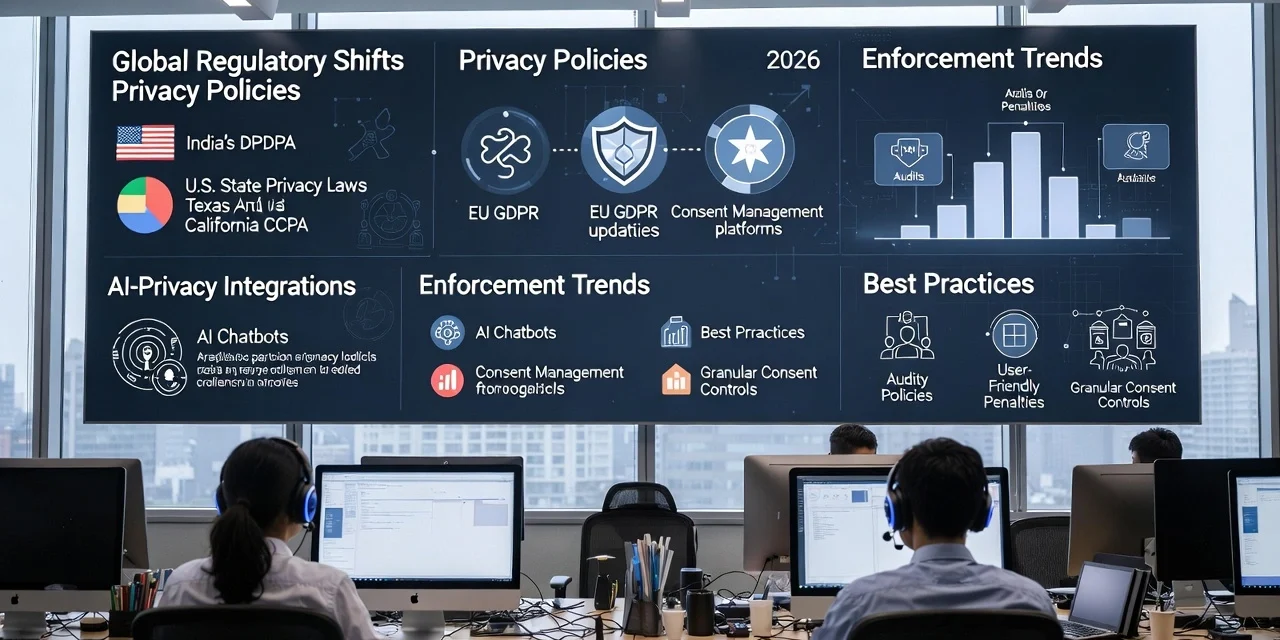
In an era where data is the new oil, privacy policies and consent management have never been more critical. As we step into 2026, the digital landscape is buzzing with regulatory changes that promise to reshape how businesses handle user data. Imagine scrolling through your favorite app, only to realize your every click is under stricter scrutiny than ever before. From India’s long-awaited data protection law finally kicking in to AI’s growing entanglement with privacy rules, these updates aren’t just legal jargon they’re game-changers for companies, consumers, and the tech world at large. Let’s dive into the latest developments, exploring what they mean and why they matter, with insights drawn from recent industry shifts.
1. Global Regulatory Shifts: New Laws Coming Online
The year 2026 marks a pivotal moment as several privacy laws transition from planning to full enforcement, creating a more robust global framework. For instance, India’s Digital Personal Data Protection Act (DPDPA) became effective on November 13, 2025, with final implementation rules now in place. This law introduces stringent requirements for data fiduciaries, emphasizing consent, data minimization, and user rights think of it as India’s answer to GDPR, tailored for one of the world’s largest digital populations.
Across the pond, the U.S. continues its patchwork approach, with multiple state privacy laws activating on January 1, 2026. States like Texas, Oregon, and Montana are rolling out comprehensive consumer privacy protections, mandating opt-out rights for targeted advertising and data sales. These build on existing laws like California’s CCPA, pushing businesses toward unified compliance strategies. In Europe, a new supplementary regulation to the GDPR took effect on January 1, 2026, streamlining enforcement processes and accelerating cross-border complaint resolutions. This means faster fines and investigations, urging companies to tighten their data handling practices.
These shifts highlight a trend: privacy isn’t optional anymore. Businesses ignoring them risk hefty penalties, but those adapting early can build trust and gain a competitive edge. Have you checked if your organization’s policies align with these new borders?
2. The AI-Privacy Nexus: Emerging Challenges and Integrations
AI’s rapid rise is colliding head-on with privacy concerns, and 2026 is set to amplify this intersection. The EU AI Act, now converging more closely with GDPR, demands transparency in AI-driven data processing, especially for high-risk systems. Expect stricter consent requirements for AI training data, with a focus on “shadow AI” unauthorized tools that could leak sensitive information.
In the U.S., federal and state actions are on the horizon, with new laws targeting AI governance. For example, regulations may require explicit consent for AI personalization in ads or content recommendations. Tech giants like Microsoft are leading by example, integrating privacy-by-design into their AI tools, such as enhanced data encryption and user-controlled consent flows. This hand-in-hand approach between security and privacy ensures that innovations don’t come at the cost of user trust.
Picture this: An AI chatbot analyzing your health queries without clear consent scary, right? Updates emphasize granular consent options, real-time disclosures, and privacy-enhancing technologies (PETs) like differential privacy to mitigate such risks. For digital marketers, this means rethinking consent management platforms (CMPs) to handle AI-specific permissions seamlessly.
3. Enforcement Trends: From Adoption to Action
Gone are the days of lax enforcement; 2026 is ushering in a tougher stance on compliance. Regulators worldwide are ramping up audits and penalties, with a focus on existing laws like GDPR and emerging ones in APAC and the Americas. In the U.S., expect more mandatory breach reporting and vendor oversight, as highlighted in year-end reviews.
HIPAA in the healthcare sector is also updating its Notice of Privacy Practices, requiring covered entities to inform users about data uses more transparently by early 2026. Meanwhile, cross-border data flows are under scrutiny, with new guidelines on adequacy decisions and standard contractual clauses. Statistics paint a stark picture: With over 65 data breaches reported in early 2026 trends, companies face average fines soaring into millions.
This enforcement wave is prompting industries to adopt proactive measures. Consent management is evolving beyond cookie banners to include dynamic, context-aware systems that adapt to user preferences in real-time. Tools like OneTrust or similar CMPs are becoming indispensable, ensuring compliance while minimizing user friction.
4. Best Practices for Updating Privacy Policies and Consent Tools
To stay ahead, businesses must refresh their privacy policies regularly. A 2026 checklist includes disclosing data categories, collection methods, usage purposes, and third-party sharing explicitly. Make policies user-friendly short, clear language with layered notices for deeper dives.
For consent management, embrace granular controls: Allow users to opt-in/out for specific data uses, like analytics versus marketing. Integrate with tools like Google’s Consent Mode or advanced CMPs to respect signals from browsers. Regular audits, employee training, and tech audits are key to avoiding pitfalls.
Real-world example: Platforms like TikTok and Facebook are updating policies to comply with U.S. laws, offering more opt-outs for data sharing. By following suit, your digital ecosystem can foster loyalty amid growing privacy awareness.
5. Looking Ahead: Implications for the Digital Future
As 2026 unfolds, the digital industry must navigate this privacy renaissance with agility. With five new laws in 2025 alone and more on the way, the focus is on ethical data use and innovation. Challenges like managing synthetic data in AI or global compliance will test resilience, but opportunities abound for those prioritizing user-centric approaches.
In summary, these updates signal a maturing digital world where privacy is a right, not a luxury. Stay informed, adapt swiftly, and turn compliance into a strength your users (and bottom line) will thank you. What’s your take on these changes? Share in the comments below!