In today’s data-driven world, analytics is the foundation of confident decision-making. Yet many organizations unknowingly rely on inaccurate or misleading data due to common tracking mistakes. These issues don’t just affect reports they undermine strategy, optimization, and long-term growth.
Below are the most common tracking mistakes we see, along with practical ways to fix them.
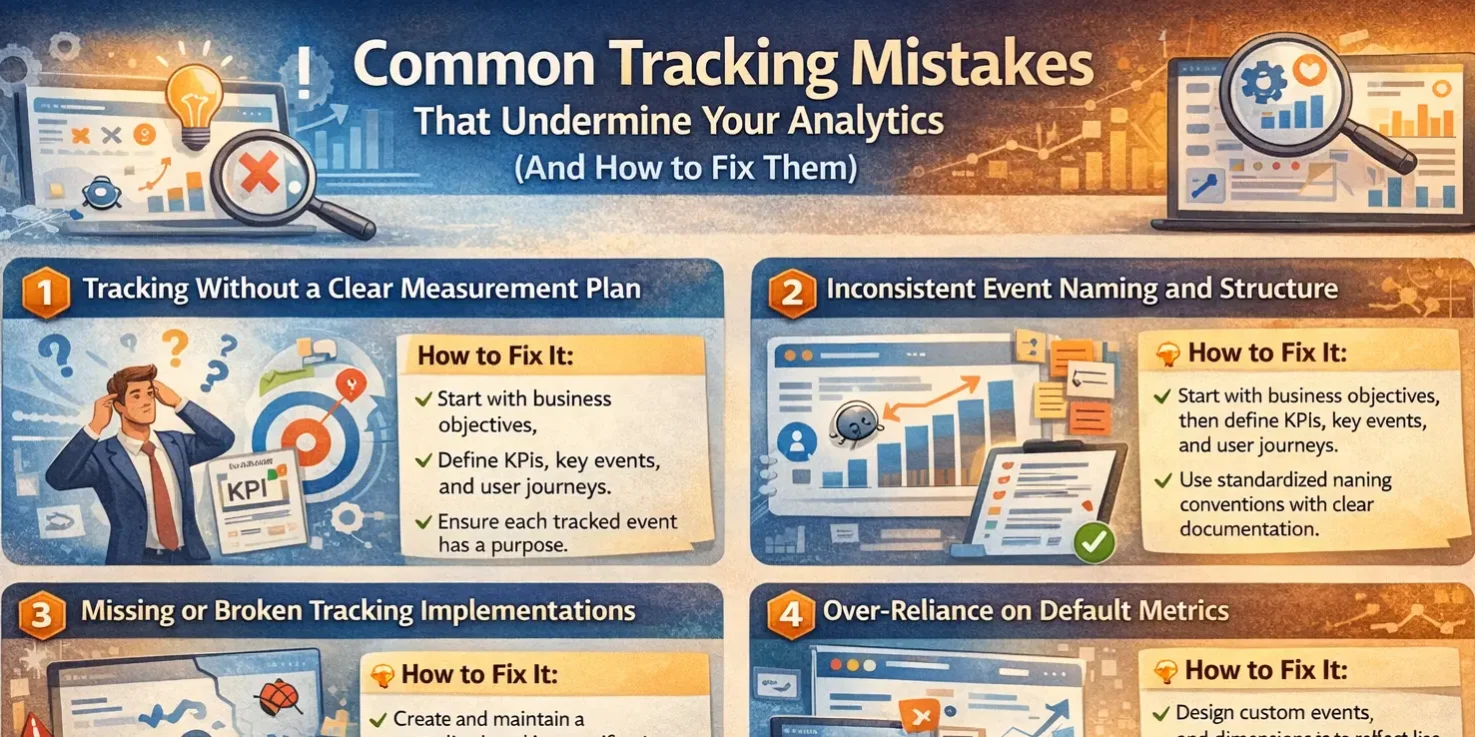
1. Tracking Without a Clear Measurement Plan
One of the biggest mistakes is implementing tracking tools before defining what success actually means. Without a clear measurement plan, teams end up collecting excessive data that doesn’t answer real business questions.
How to fix it:
Start with business objectives, then define KPIs, key events, and user journeys. A solid measurement plan ensures every tracked event has a purpose and aligns with decision-making needs.
2. Inconsistent Event Naming and Structure
Inconsistent event names, parameters, or properties create confusion and unreliable reports. This often happens when multiple teams implement tracking without shared standards.
How to fix it:
Create and maintain a centralized tracking specification. Standardized naming conventions and clear documentation ensure data consistency across platforms and over time.
3. Missing or Broken Tracking Implementations
Events that fire incorrectly, duplicate tags, or missing triggers are extremely common especially when websites change frequently. These issues often go unnoticed until data discrepancies appear.
How to fix it:
Implement a QA process for tracking. Use tools like preview modes, debugging extensions, and test environments to validate events before and after deployment.
4. Over-Reliance on Default Metrics
Default metrics from analytics tools are useful, but they rarely tell the full story. Many teams rely on surface-level numbers without understanding user behavior or intent.
How to fix it:
Design custom events and dimensions that reflect real user actions. Focus on behavioral tracking that connects user journeys to business outcomes.
5. Ignoring Data Discrepancies Across Platforms
It’s common to see mismatched numbers between analytics tools, ad platforms, and internal systems. Ignoring these discrepancies leads to false confidence in reports.
How to fix it:
Understand how each platform collects and processes data. Align definitions, attribution models, and time zones, and regularly audit data sources for consistency.
6. Treating Analytics as a One-Time Setup
Analytics is not a “set and forget” system. Websites evolve, features change, and business priorities shift but tracking often stays the same.
How to fix it:
Continuously review and optimize your tracking setup. Regular audits ensure your data remains accurate, relevant, and aligned with current business goals.
Turning Data Into a Competitive Advantage
Accurate tracking is not just a technical requirement it’s a strategic advantage. When data is trusted, teams can move faster, make better decisions, and optimize with confidence.
At Zenitrix Core, we help organizations design reliable tracking systems, validate analytics implementations, and transform raw data into actionable insights making data the true core of every digital strategy.