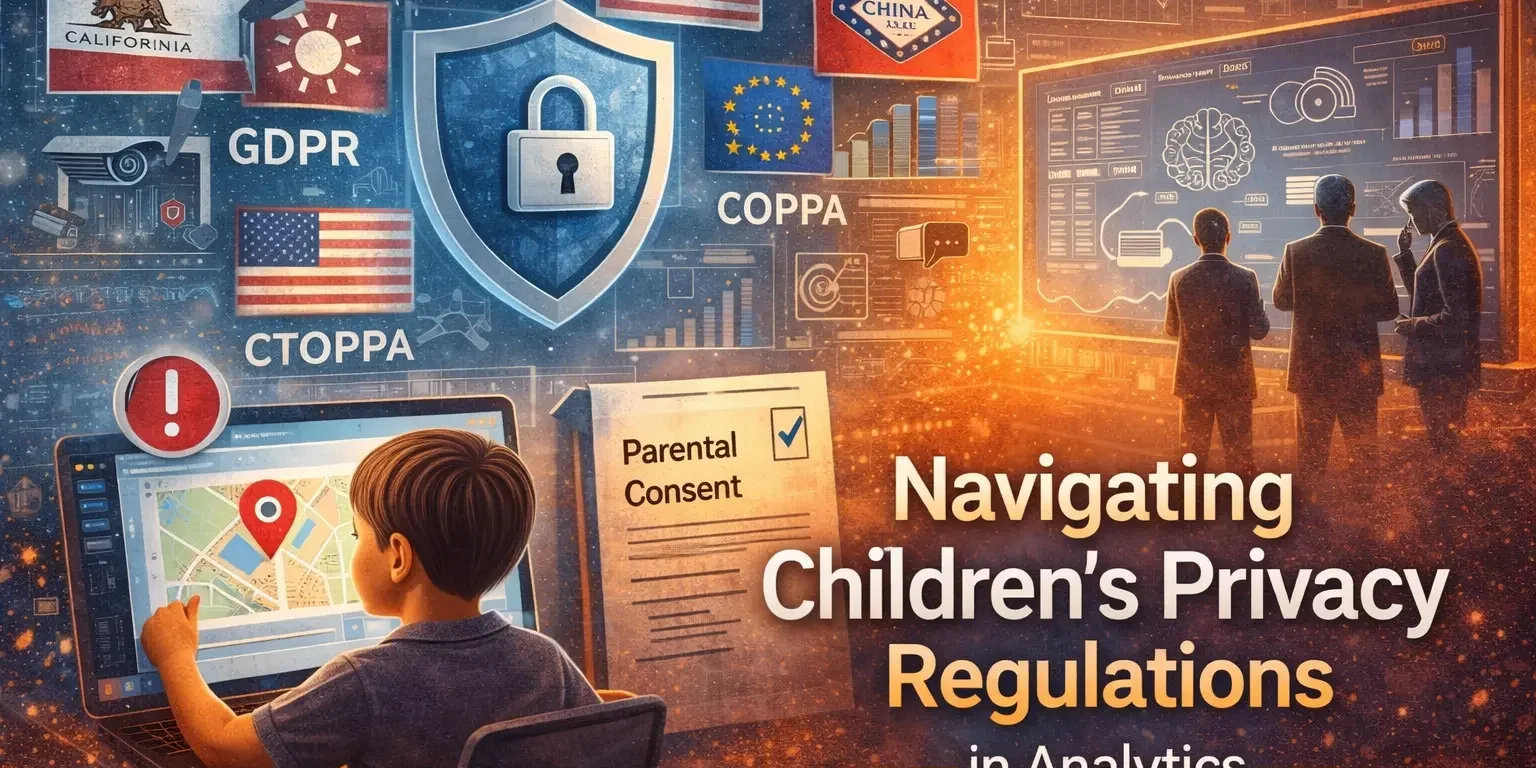
In the digital age, where data fuels everything from targeted ads to personalized experiences, protecting children’s privacy has become a battlefield of regulations, innovations, and ethical dilemmas. As we navigate 2026, a wave of new laws is crashing down on analytics professionals, forcing businesses to rethink how they collect, analyze, and use data from young users. Imagine a world where a simple app download could trigger hefty fines if it mishandles a teen’s location data it’s not dystopian fiction; it’s the reality unfolding now. From Arkansas’s bold extensions of COPPA-like protections to California’s treatment of under-16 data as sensitive information, these changes aren’t just compliance checkboxes; they’re reshaping the analytics landscape. Join us as we unpack the latest developments, their implications for data-driven industries, and what experts predict for the year ahead because in 2026, ignoring kids’ privacy could cost you more than you think.
1. The Global Push: New Laws Taking Effect in 2026
2026 kicked off with a regulatory bang, as multiple jurisdictions rolled out or strengthened children’s privacy protections that directly impact analytics practices. In the U.S., states like Arkansas, Louisiana, and Nebraska have introduced comprehensive measures effective this year. For instance, Arkansas’s Children and Teens’ Online Privacy Protection Act (CTOPPA), which went live on July 1, 2026, extends safeguards to teens under 17, requiring platforms to obtain verifiable parental consent before collecting or processing their data. This law bans targeted advertising to minors and limits data collection to essentials, forcing analytics teams to implement age-gating mechanisms and rethink behavioral tracking.
Across the Atlantic, the EU’s GDPR continues to evolve with supplementary regulations effective January 1, 2026, emphasizing faster enforcement on child data mishandling. Meanwhile, India’s Digital Personal Data Protection Act (DPDPA), fully implemented with rules in place since late 2025, treats children’s data with heightened scrutiny, mandating data minimization and explicit consent. These global shifts mean analytics pros must now map data flows with precision, ensuring that tools like Google Analytics or custom dashboards comply with varying age thresholds under 13 in some places, up to 18 in others. As one privacy expert notes, “It’s no longer about collecting everything; it’s about justifying every byte.”
2. U.S. State-Level Innovations: From California to Minnesota
The patchwork of U.S. state laws is particularly challenging for analytics in 2026. California’s CCPA amendments, effective January 1, now classify data from under-16s as sensitive personal information, requiring opt-in consent for processing and mandatory risk assessments for activities like profiling or AI training. This intersects with the state’s Digital Age Assurance Act (set for 2027 but influencing strategies now), compelling app developers to treat user-provided ages as “actual knowledge,” amplifying compliance burdens in analytics pipelines.
Other states are following suit: Minnesota’s social media warning label law, effective July 1, 2026, mandates platforms to display mental health warnings for minors, while Oregon prohibits selling geolocation data of under-16s. Nebraska’s LB 504, live since January 1, demands privacy-by-design features like no infinite scrolls or push notifications for kids, directly affecting engagement metrics in analytics. These rules aren’t just words on paper; they’re enforced with penalties up to $10,000 per violation in places like Louisiana. Analytics teams are scrambling to integrate age verification tech, such as AI-driven estimates or parental controls, to avoid the pitfalls of “known minor” data breaches.
3. Federal Updates and Enforcement: COPPA’s Evolution
On the federal front, the FTC’s long-awaited COPPA amendments, effective June 23, 2025, but with full compliance required by April 22, 2026, are a game-changer for analytics. These updates expand “personal information” to include biometrics, require separate parental consent for data sharing, and mandate written security programs with strict retention policies no more indefinite storage of kids’ data. Parents must now be notified about third-party data recipients, adding layers to analytics consent flows.
Enforcement is ramping up too. The GPEN’s 2025 sweep on children’s data, extending into 2026 audits, scrutinizes apps and sites for age verification and tracking safeguards. Recent FTC actions, like those against non-compliant platforms, signal zero tolerance, with fines reaching $53,088 per violation. For analytics pros, this means auditing data lakes for child-related info and implementing deletion protocols turning potential liabilities into compliance strengths.
4. AI and Emerging Tech: The New Frontier of Challenges
AI’s integration into analytics is under the microscope in 2026, with regulations like the EU AI Act demanding transparency for high-risk systems involving kids’ data. California’s LEAD Act proposals from 2025 echo this, requiring parental consent for using child data in AI training and risk assessments for harm. Globally, laws are cracking down on “shadow AI” that might leak minor data, pushing for privacy-enhancing tech like differential privacy.
In practice, this means analytics tools must log data provenance and avoid re-identification risks in aggregated sets. Experts warn of “anonymization pitfalls” what seems de-identified today could be reversed tomorrow with advancing tech. Businesses are turning to tools like OneTrust for consent management, ensuring AI-driven insights respect age-based restrictions.
5. Best Practices and Future Outlook: Turning Compliance into Opportunity
Navigating this maze? Start with robust data mapping, age assurance protocols, and regular audits. Experts recommend privacy-by-design: embed safeguards early, use granular consents, and prioritize first-party data over risky third-party sources. In China, mandatory reports on children’s data by January 31, 2026, set a precedent for transparency.
Looking ahead, 2026 could see more harmonization, but fragmentation persists. As one analyst puts it, “Compliance isn’t a cost it’s a trust-builder.” Businesses that adapt will not only avoid fines but gain user loyalty in a privacy-conscious world. Stay tuned; the kids’ privacy saga is just heating up.